
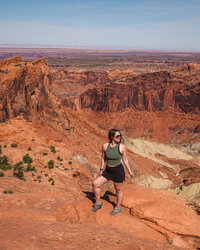

Planning on going hiking in Moab, Utah? Learn what you should pack so you can be safe and prepared on the trail inside of this post!
Moab is one of the best hiking destinations in the U.S., in my opinion. It’s not only home to Arches and Canyonlands National Parks, but there’s also tons of BLM land and a couple of state parks to explore as well. There’s something for everyone in Moab, from easy, family-friendly trails, to dog-friendly hikes, to long, epic adventures.
I live about 90 minutes from Moab and hike in the area year-round. This gear guide is based on my personal experience as an avid desert hiker and includes recommendations that I genuinely use and love.

What are the 10 essentials?
Throughout this guide you’re going to see references to “the 10 essentials.” These are 10 different types of hiking gear that you should ideally always carry with you when hiking. Hopefully you won’t need to use most of these items during your hike, but if you find yourself in an emergency situation you’re going to be glad you have them!
Affiliate Disclaimer: This article contains affiliate links, which means if you click a link & make a purchase, Kate Outdoors may receive a small commission at no additional cost to you.
Your Complete Moab Hiking Packing List
1. Backpack
You can’t carry your hiking gear without a backpack and there are a lot of options out there. The best hiking backpack is going to be the one you already have, but if you’re in the market for something new, I personally use and love the Osprey Sirrus 24L pack. Read my complete review of the Osprey Sirrus 24L pack to learn more!
On shorter hikes I typically opt to wear a trail running vest for a lighter option. You can’t carry as much gear in a trail running vest as you can in a regular backpack, so I only wear it on trails where I need limited water and other essentials.
Gear Recommendations:

2. Hiking Shoes
In addition to a backpack, a good pair of hiking shoes is essential when hiking in Moab. Many of the trails in the area involve hiking over slickrock, which means having shoes with good traction is a must. A regular pair of sneakers aren’t going to cut it!
You can opt for a pair of traditional hiking boots, like the aptly named Merrell Moab 3, or trail runners, like the Altra Lone Peaks for a lighter option. The right hiking shoes for you is ultimately a matter of personal preference. The most important consideration is having good traction for rocky trails.
Gear Recommendations:
3. Hydration: Water + Water Bladder or Bottle
Without a doubt the most important thing to carry on your Moab hike is sufficient water. Do not underestimate the importance of staying hydrated while hiking in the desert!
The general rule of thumb in the desert is to carry at least 1L of water per hour of hiking, either in a water bladder or water bottle. However, depending on the time of year, the temperature, and how acclimated you are to the desert, you may need more or less water. During warmer months you may also want to consider adding electrolytes to your water, like Scratch, for added hydration when you’re sweaty.
Gear Recommendations:

4. Fuel: Snacks
Taking a snack break on the trail is one of the best parts of hiking. You might not need to eat much during a short hike, especially if you have a meal ahead of time, but you never know how long you may be out on the trail, so carrying extra snacks is always a good idea. Check out some of my favorite hiking snack options inside of this post.
5. Sun Protection
Sunglasses
A pair of sunglasses are an absolute must when hiking in the desert (at least for me!). Any pair of sunglasses will get the job done, but I recommend wearing sunglasses with polarized lenses to help reduce glare.
Gear Recommendation: Sunski Miho Polarized Sunglasses
Sunscreen or Sun Protecting Clothing
Sunscreen is another must have for sun protection when hiking in the desert. Make sure to apply some before hitting the trail (especially on your face!) and carry it in your pack to reapply every 2 hours or after getting sweaty.
If you don’t want to wear sunscreen on your body you can opt for clothing that provides sun protection, like a sun shirt. You can read my review of my favorite sun shirt, the Black Diamond Alpenglow hoody. Even though it has long sleeves, it’s lightweight and breathable, which makes it perfect for desert hikes.
Gear Recommendation: Supergoop Mineral Mattescreen

Lip Balm
When it comes to sun protection while hiking, don’t forget your lips (to be honest, this is something I often forget!). Toss a tube of lip balm with SPF in your pack to keep your lips hydrated and protected.
Gear Recommendation: Badger SPF 15 Lip Balm
6. Extra Clothes
Appropriate Layers
Dressing for a hike in Moab is going to depend on a number of factors including the forecast, time of year, and your personal preferences. Helpful layers to consider wearing or packing for your hike in Moab include a sun shirt, windbreaker, and/or jacket. If there’s consistent rain in the forecast, it’s also a good idea to pack a rain coat (although most rain showers tend to pass quickly).
Gear Recommendations:
- Patagonia Torrentshell Jacket (rain coat)
- Black Diamond Alpine Start Jacket (wind breaker)
- Patagonia Nano Puff (winter jacket)
Hat
While it’s not a total necessity, it’s a good idea to wear a hat while hiking in Moab, especially on sunny days. If you’re hiking during the winter you’re probably going to want to opt for a hat that can help keep you warm. Don’t underestimate how chilly it can get in the high desert!
Gear Recommendation:
Extra Socks
Having an extra pair of socks in your pack can come in handy on hikes that have water crossings or where your feet might get wet. Keeping your feet dry while hiking helps prevent blisters and keeps them healthy. It also feels luxurious to swap out your socks in the middle of a long, challenging hike. Opt for wool socks for their quick drying, moisture-wicking properties.
Gear Recommendation: Smartwool Low Cut Performance Socks

7. WAG Bag
Grand County, Utah, has very strict laws regarding human waste (aka poop) disposal, which makes carrying a WAG bag on your Moab hike an essential. Human waste doesn’t break down easily in desert environments, so the best practice for managing poop is to pack it out with you instead of burying it.
WAG bags are very easy to use. They come with 2 bags (one that you’ll poop directly in and one to store it), along with a small wad of toilet paper and a hand sanitizer wipe. Help keep Moab beautiful by recreating responsibly!
Gear Recommendation: The Original WAG Bag (12 pack)
8. Headlamp
A headlamp might seem like an unnecessary piece of hiking gear during a day hike, and if you’re hiking early in the morning (which is a good idea to beat the heat and the crowds) you probably won’t need one. However, if you’re hiking later in the day or going on a sunset hike it’s important to carry a headlamp to help you see the trail after it gets dark. Check out my guide to the top sunset spots in Moab for inspiration!
Gear Recommendation: Black Diamond Cosmo Headlamp

9. First-Aid Kit
A well stocked first-aid kit should always be in your pack as one of the 10 essentials. Your individual needs may vary, but standard items to pack include band-aids, moleskin, Tylenol/Advil, and any emergency medications you may need, including an inhaler or Epipen. When hiking in the desert it’s also helpful to carry a pair of tweezers in case you accidentally brush up against (or fall into) a cactus!
Gear Recommendation: Adventure Medical Kit
10. Navigation: Map & Compass
While most trails around Moab are well-signed and fairly easy to navigate, you should always carry a map & compass in the event you get lost. While a physical map is going to be your best option, there are also a lot of apps out there that provide pretty accurate digital maps (I personally track all of my hikes on AllTrails).
If you are going to rely on a digital map make sure you also carry a backup battery power bank (plus a charging cord!) in case your phone dies.
Gear Recommendations:

11. Emergency Shelter
An emergency shelter is another piece of gear that you’re hopefully not going to need while hiking in Moab, but it could save your life in the event you get lost or severely injured. Having an emergency bivvy or space blanket can help you stay comfortable and warm in the unlikely event you have to spend the night in the backcountry. Since they’re inexpensive and lightweight this is one piece of hiking gear you can easily keep in your pack without having to think about it.
Gear Recommendation: SOL Emergency Bivvy
12. Knife
It’s pretty unlikely that you’re actually going to need a knife while hiking in Moab, however it’s one of the 10 essentials, which is why I included it on the list. A knife can serve a variety of purposes from gear repair to protection in the event of an extreme emergency. You can also carry a multitool for even more tool options, like mini-scissors or pliers.
Gear Recommendation: Gerber Zilch Folding Knife
13. Hiking Poles
You don’t necessarily need to carry hiking poles while hiking in Moab, but they can be a useful piece of gear to have on more difficult trails. Hiking poles have a number of different benefits, including taking pressure off of your knees, helping with stability in rocky terrain, and providing momentum to help you hike faster.
Gear Recommendation: Trekology hiking poles

14. Emergency GPS
I always carry a Garmin inReach mini GPS on hikes just in case I need to easily get in contact with emergency officials. Moab has pretty spotty cell reception depending where you’re hiking, so it’s helpful to have an emergency device just in case. Some phones also offer a way to contact emergency officials while out of service, but they may not be as precise as an emergency GPS device.
Gear Recommendation: Garmin inReach mini 2
15. Camera
Carrying a camera with you while hiking in Moab obviously isn’t necessary, especially since your phone probably takes high-quality photos and videos. However, if you’re a photographer or just want to be more intentional about the photos you take, then make sure to bring along your camera. Moab has some pretty epic views!
Gear Recommendations:
- Sony a7iii (the camera I use for many of the photos on my blog)
- Peak Design Camera Clip (what I use to attach my camera to my pack)

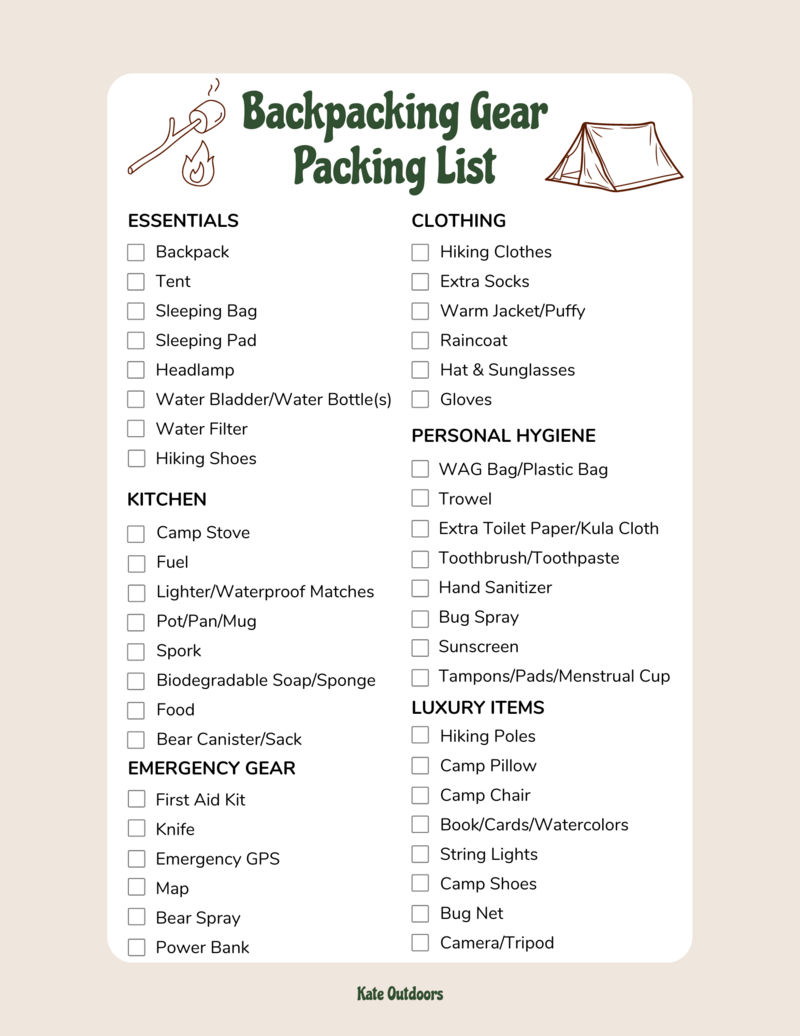
Download a FREE Packing List For Your Moab Hike
Other Moab, Utah Blog Posts You Might Enjoy:
- 20 Best Things to Do in Moab
- 25 Best Hikes in Moab
- The Best Time of Year to Visit Moab
- 10 Dog-Friendly Hikes in Moab
- 10 Epic Moab Sunset Spots
Pin It For Later: